
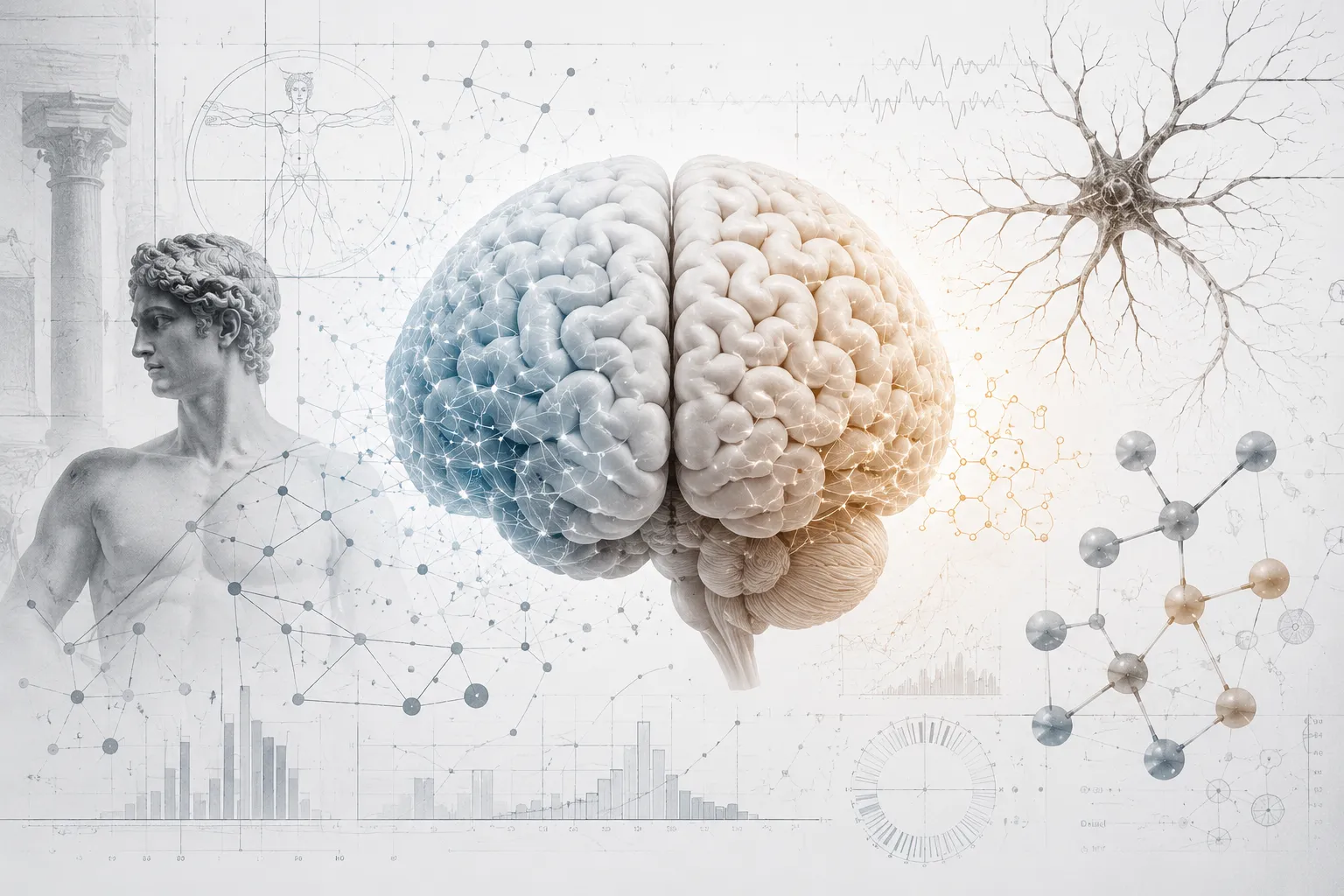
Lust and desire are far more than transient pleasantries or hedonic luxuries of human existence. Viewed through the lens of evolutionary biology, desire operates as a highly strategic motivational system serving as a vital engine of self-preservation. Without the biological drive of desire, fundamental survival behaviors—nourishment, reproduction, cooperative social bonding—would rapidly disintegrate. It represents the indispensable evolutionary force compelling organisms to seek out resources essential for survival and species perpetuation.
Etymologically, the German word Lust traces back to Old High German roots such as willilust or wolalust, which originally denoted an urgent longing, exuberant delight, or passionate inclination. While everyday colloquial usage often reduces the concept exclusively to raw genital sexuality, contemporary science defines it far more expansively: an intensely pleasurable sensation accompanying the satisfaction of fundamental needs or the anticipation thereof. This modern understanding is by no means an immutable consensus, but the culmination of millennia of intellectual wrestling, during which erotic desire was alternately venerated as a divine gift or condemned as demonic corruption.
1. From Ecstasy to Asceticism: The Philosophical and Historical Journey
Throughout human history, societal attitudes toward desire have exhibited extreme volatility, oscillating between elevation as the supreme good and condemnation as a deadly sin.
- Classical Dichotomies: Classical hedonism, pioneered by Aristippus of Cyrene, regarded immediate sensory pleasure (hēdoné) as the ultimate purpose of life. In contrast, Epicurus defined pleasure negatively as a tranquil state: the absence of bodily pain (aponia) and the attainment of undisturbed mental tranquility (ataraxia). He advocated a “hedonic calculus,” advising against ephemeral gratifications that compromise long-term serenity.
- Medieval Pathologization: In medieval Christian theology, particularly formulated by Thomas Aquinas, carnal desire was stigmatized as luxuria. It was framed as a corrosive vice that blinds rational faculties and debases the soul. Augustine famously maintained that true blessedness is found exclusively in the contemplation of the divine, never in worldly, sensual delights.
- Modern Synthesis and Pessimism: While Enlightenment utilitarianism (Bentham and Mill) rehabilitated pleasure as the moral benchmark for the greatest good, Arthur Schopenhauer articulated a tragic counter-vision. He conceptualized desire as the blind, insatiable engine of the “Will to Live,” driving individuals through an endless cycle of longing, brief relief, and inevitable boredom.
Remarkably, modern neuroscience now provides a biological correlate for Schopenhauerian pessimism: mammalian neural architecture appears specifically engineered for perpetual seeking, frequently uncoupling the urgency of wanting from the subjective savoring of liking.
2. The LUST Network: Neurobiological Architecture
Affective neuroscience has transformed our understanding of instinctual drives by decoding emotions as evolutionarily hardwired neurobiological systems. Renowned neuroscientist Jaak Panksepp identified the LUST system as one of seven primary emotional operating networks conserved across mammalian brains.
This network is deeply rooted in subcortical structures and operates largely beneath conscious awareness. Its anatomical circuitry extends from the medial amygdala and hypothalamus through the midbrain (notably the ventral tegmental area) to the septum and specialized regions of the basal forebrain.
Crucial hubs within this circuitry include the shell of the nucleus accumbens and the ventral pallidum, which regulate the affective intensity of pleasure. The remarkable evolutionary preservation of these circuits across mammalian species highlights their indispensable survival function. Yet within this neural architecture lies a critical divergence, elucidated only recently through the distinction between craving and pleasure.
3. The Dopamine Paradox: “Wanting” vs. “Liking”
The Incentive Salience Theory developed by Kent Berridge and Terry Robinson has proved foundational for contemporary addiction and motivation research by resolving a biochemical paradox: organisms can intensely crave something without actually enjoying it. Here, Schopenhauer’s “insatiable will” is observed at the molecular level:
- Wanting (Desire/Craving):
- Neurochemistry: Driven primarily by dopamine.
- Function: Generates incentive salience, motor initiative, active foraging, and reward anticipation.
- Neural Substrate: Mesolimbic dopamine pathway connecting the VTA to the ventral striatum.
- Behavioral Dynamic: Fires robustly in response to the Reward Prediction Error (surging when cues are novel or outcomes exceed expectations). Highly susceptible to the Coolidge Effect.
- Liking (Pleasure/Hedonic Savoring):
- Neurochemistry: Mediated by endogenous opioids, endorphins, and endocannabinoids.
- Function: Generates visceral hedonic pleasure and the sensory gratification of consummation.
- Neural Substrate: Restricted to minuscule, interconnected “hedonic hotspots” within the nucleus accumbens shell and ventral pallidum.
- Behavioral Dynamic: Imparts the actual subjective “glow” and savoring of an experience.
A prominent demonstration of this dissociation is the Coolidge Effect: when exposed repeatedly to the same partner or erotic stimulus (as in long-term monogamy), dopamine signaling within the nucleus accumbens attenuates, diminishing spontaneous drive. However, the introduction of a novel stimulus promptly reactivates dopaminergic firing.
In compulsive and addictive dynamics, this yields a tragic neurochemical trap: “wanting” becomes pathologically sensitized, while “liking” rapidly blunts due to receptor down-regulation and habituation.
4. Biochemical Conductors: Oxytocin, PEA, and Gender Dynamics
Hormones and neuropeptides function as essential modulators, determining how receptive neural circuits are to erotic cues. During the acute phase of infatuation, a surge of phenylethylamine (PEA) inundates the brain, triggering euphoric states neurochemically akin to psychostimulants.
As romantic connection deepens into attachment, oxytocin assumes a central orchestrating role. It facilitates emotional intimacy through the “inhibition of social inhibition,” suppressing fear responses in the amygdala and heightening sensitivity to interpersonal social cues. Oxytocin cements interpersonal attachment through conditioned reward learning, functionally encoding one’s partner as a source of safety and gratification.
Gender-differentiated nuances are evident: while oxytocin in females frequently amplifies the longing for emotional closeness, its pair-bonding properties in males can be partially modulated by testosterone—the androgen that governs baseline libido across all sexes. Following orgasm, prolactin acts as an endocrine brake, inducing satiety and temporarily down-regulating the dopaminergic seeking system.
5. Accelerator and Brake: The Dual Control Model
The psychological analogue to this neurochemical modulation is the Dual Control Model of sexual response formulated by John Bancroft and Erick Janssen. It conceptualizes sexual desire as a dynamic equilibrium between excitation (the “gas pedal”) and inhibition (the “brake”). In clinical practice, this framework represents a breakthrough: sexual difficulties are rarely caused by a defective accelerator, but far more commonly by an overactive brake.
Clinical studies establish that a female sexual function index (FSFI) score below 26.55 represents a validated diagnostic threshold for sexual dysfunction. Psychological parameters such as Arousal Contingency (the requirement for ideal, undisturbed external circumstances) and depressive affect emerge as the most potent predictors of suppressed libido.
The psychological brake is primarily engaged by:
- Concerns About Sexual Function: Performance anxiety, fear of failure, and self-surveillance (spectatoring).
- Arousal Contingency: Vulnerability to distractions, sensory discomfort, and contextual disruption.
- The Reality Principle: In Freudian terms, the cognitive necessity to calibrate primal drives against social constraints and environmental demands.
6. Conclusion: A Multidimensional Tapestry
A scientific journey through human desire reveals a sophisticated, delicate, and multidimensional system. Erotic desire is neither a primitive reflex nor an unruly impulse; it is the nuanced culmination of ancient evolutionary networks like Panksepp’s LUST system, neurochemical bifurcations between dopamine and endogenous opioids, and psychological regulatory balances.
Only by examining biological architecture, biochemical modulators, and psychological inhibition mechanisms in concert can we appreciate why desire serves both as the bedrock of human connection and a frequent source of emotional vulnerability. The synthesis of philosophical inquiry and cognitive neuroscience offers a profound lesson: while the yearning for intimacy is inscribed into our biology, its enduring fulfillment remains an exquisite art—a collaborative dance of chemistry, psyche, and culture.
Research and draft supported by AI, editorially reviewed.
Helpful article?
Loading ratings...